
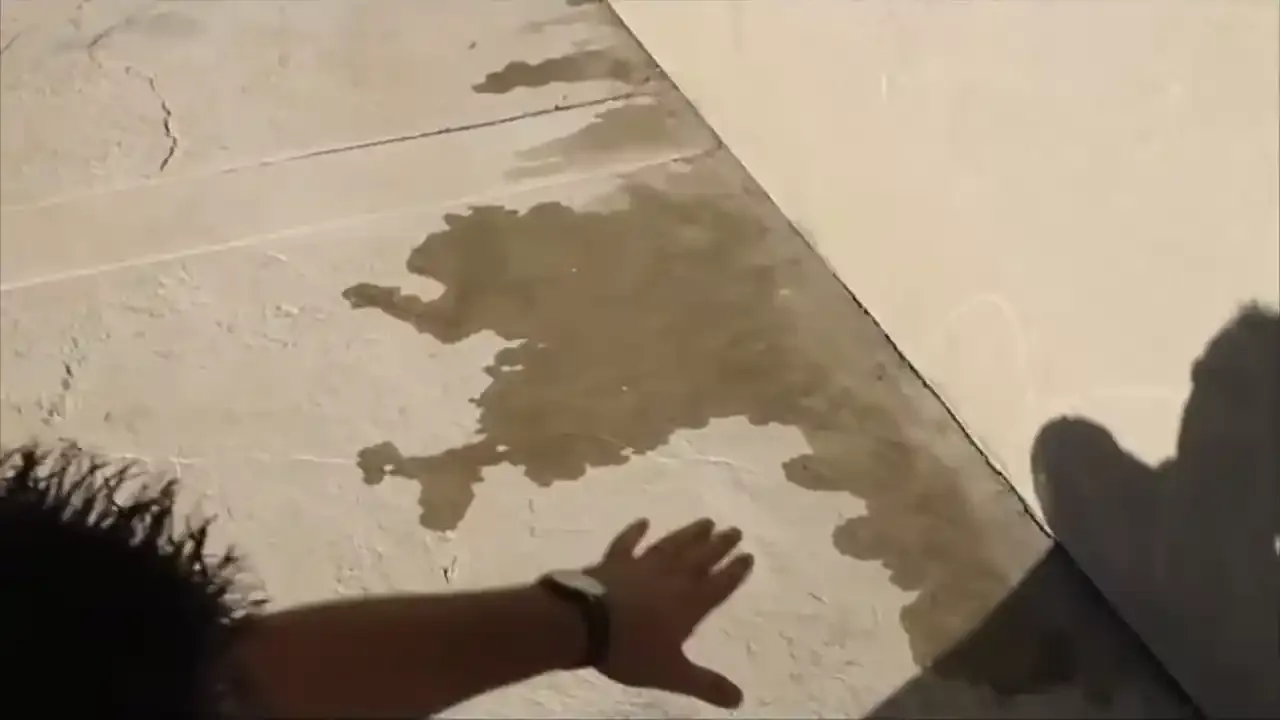
What a Slab Leak Means for Your Pueblo Home
A slab leak is a failure in the water supply line running beneath your home's concrete foundation. In Pueblo County, the combination of aging copper supply systems and clay-heavy soils makes slab leaks more common than in most comparable US markets, and harder to diagnose without proper equipment.
Pueblo's clay-heavy soils add a compounding stress factor: bentonite clay beneath the slab swells when a leak saturates it and contracts when it dries. The differential movement strains adjacent pipe sections and the slab itself, accelerating failure rates beyond what pipe age alone would produce.
The first sign is usually a water bill that climbs 20 to 50 percent with no corresponding change in household water use. A continuous sound of running water with all fixtures off confirms active flow somewhere in the system. Warm areas on a concrete floor indicate a hot water line failure directly beneath that spot.
How We Detect Slab Leaks in Pueblo County
Detection comes before any concrete opens. Getting that sequence right is what separates a precise, minimal repair from a destructive fishing expedition through your floor. We use three primary methods, often in combination.
-
Acoustic leak detection : Sensitive listening equipment placed on the floor surface or access points picks up the sound signature of water escaping under pressure through a pipe wall. Concrete transmits sound effectively, and experienced operators can triangulate the leak location to within a few inches. This is the most reliable method for pressurized supply line failures.
-
Thermal imaging : A warm water supply line leak or a cold water leak against a warm slab creates temperature differentials visible through an infrared camera. We scan the floor surface for hot spots (from hot water line failures) or cool anomalies. Thermal imaging is fast and non-contact, it covers a large area quickly before we narrow the search with acoustic tools.
-
Electronic amplification, When acoustic signals are weak or ambient noise interferes, electronic leak detection amplifiers filter and boost the target sound. This method is effective in homes with thick or heavily reinforced slabs, common in some post-1980 Pueblo West construction.
We do not open concrete until detection is complete. Every repair call starts with a full detection pass. The opening comes after, not instead of, the diagnosis.
Slab Leak Repair Options for Pueblo Homes
Once the leak is located, repair method selection depends on the pipe's age and overall condition, the leak's accessibility, and the layout of your system. Three approaches cover the majority of slab leak scenarios in Pueblo County homes.
Targeted Spot Repair
The concrete is opened at the confirmed location (typically a 12 to 18 inch core drill)and the failed section of pipe is accessed, cut out, and replaced. The repair is made, pressure tested, and the concrete core patched before the call is closed.
Pipe Rerouting (Above-Slab)
A pipe reroute abandons the failed underground run and installs a new line above the slab through wall cavities or the attic. This eliminates additional concrete work and is typically more cost-effective than a spot repair when the failed section sits in a difficult access location.
Full Repipe
When detection reveals multiple failure points or widespread pipe deterioration, common in Belmont and Lakeview copper systems from the 1970s. A whole-house repipe with PEX resolves the root cause rather than patching individual events.
Slab Leaks and Pueblo County Soil Conditions
Pueblo County's bentonite clay soils amplify slab leak risk. Clay under the slab expands when a leak saturates it and contracts when it dries: the differential movement stresses adjacent pipe sections and the slab itself, accelerating the failure rate in ways that stable sandy soils do not.d to absorb indefinitely.
Sustained moisture from a slab leak causes localized clay swelling, lifting that portion of the slab while adjacent sections remain stable. The differential movement produces slab cracks, sticking doors, and wall cracks that follow the stress boundary between the saturated and unsaturated zones.
East Side Pueblo, Regency Park, and Sunset Park properties on clay-heavy ground are the highest-frequency slab leak zones in the county.n rather than cosmetic repair.
What to Do While Waiting for a Detection Call
If you suspect a slab leak, close the main water supply valve, at the street meter or where the supply enters the house, to stop additional soil saturation. Mark warm or wet floor areas with tape as a reference point for the detection survey. Call (303) 552-3896.
Do not open concrete before calling for professional detection. Without acoustic confirmation, excavation guesswork widens the access scope and the repair cost. Call (303) 552-3896.