
What Non-Invasive Leak Detection Means
Non-invasive leak detection means no wall is cut, no concrete is cored, and no ground is excavated until the failure location has been confirmed by detection equipment. The repair access (whatever its size and form)is opened at the confirmed location only. This is the opposite of the traditional approach of opening surfaces at suspected locations and searching for the leak through progressive demolition.
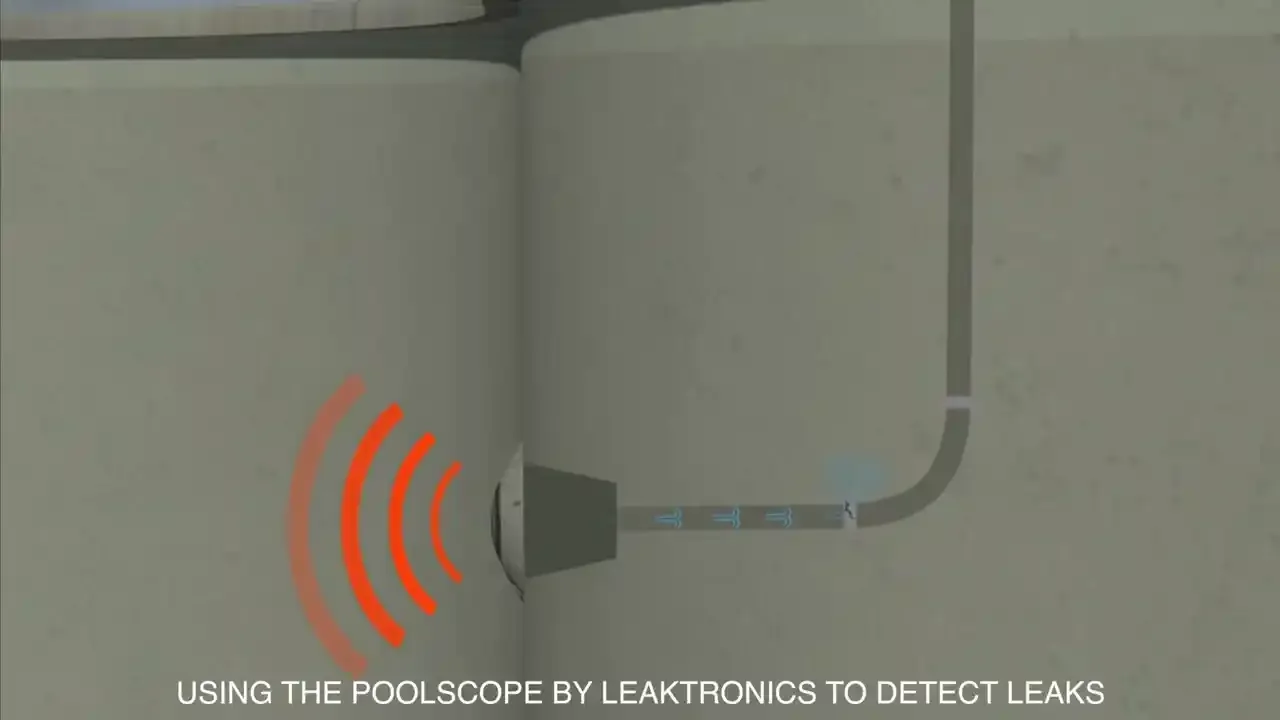
The term describes an outcome (no unnecessary surface damage)rather than a single specific method. The detection tools that achieve this outcome are acoustic listening equipment, thermal infrared cameras, tracer gas sensors, electronic amplifiers, and correlators. Each works without physical contact with the pipe itself. Each locates the failure from the outside of the structure surrounding the pipe. Together they cover the full range of leak types found in Pueblo County's residential and commercial properties.
Why Non-Invasive Detection Matters in Pueblo County's Housing Stock
The case for non-invasive detection is particularly strong in Pueblo County's historic housing stock. In a home in Bessemer or Mesa Junction that was built in 1920 or 1935, the original tile floors, plaster walls, and wood framing have survived a century of service. Opening a section of that floor or wall speculatively, at a location that is an educated guess rather than a confirmed leak site, risks damaging irreplaceable historic material on a first attempt, then potentially a second or third attempt, before the leak is found.
In the mid-century Belmont, Country Club, and Lakeview tract homes, the case is economic: a slab-on-grade home with a concrete floor covered by tile or hardwood flooring faces a significant restoration cost for every unnecessary core drill. A detection process that produces a confirmed location on the first detection pass produces a single access opening, a single restoration patch, and a single repair. Multiple speculative openings multiply the restoration cost without accelerating the repair.
Non-Invasive Methods by Leak Type
Supply Line Failures: Acoustic and Thermal
Pressurized supply line leaks, pinholes, slab leaks, main line breaks, are the strongest candidates for acoustic non-invasive detection. The continuous pressure-driven sound signal travels through concrete, soil, and framing to the surface where listening equipment captures it. Thermal imaging adds temperature mapping for hot water line failures. The combination produces confirmed locations for the majority of residential supply line failures without any surface access.
Drain and Sewer Failures: Tracer Gas
Non-pressurized drain systems require tracer gas for non-invasive detection. Nitrogen-hydrogen tracer introduced at a cleanout migrates through any pipe breach and surfaces above the failure point. A detector probe swept above the drain run locates the escape point without requiring camera access through the pipe or exploratory cutting of the floor above.
Underground Failures: Correlator and Sonar
Buried pipe failures beneath yards and driveways are located non-invasively with acoustic correlators, two probes at known pipe access points calculate the failure location from the sound arrival time differential. No excavation precedes the detection. The repair trench is opened at the confirmed point only. Call (303) 552-3896 for non-invasive leak detection throughout all of Pueblo County.