
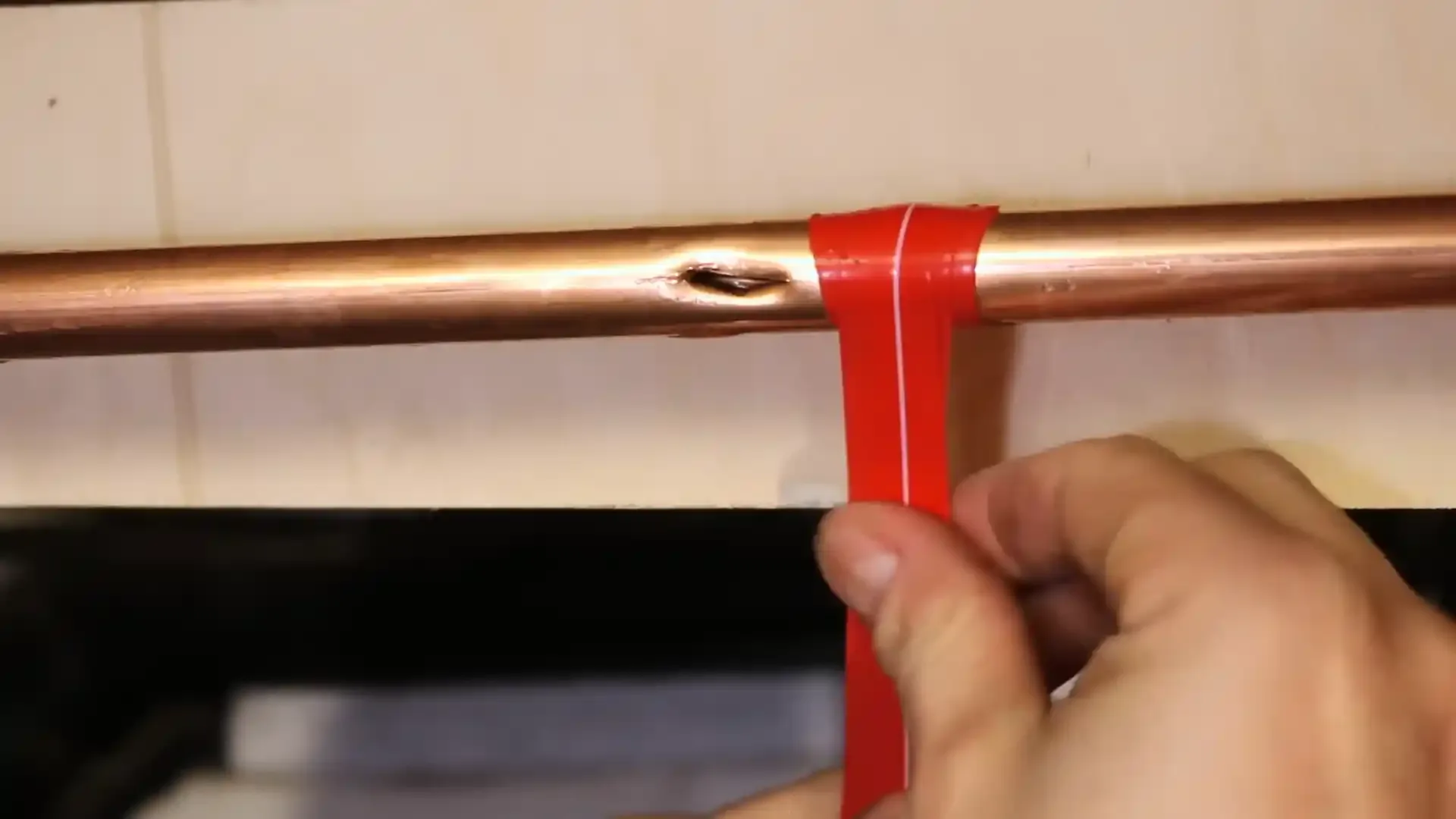
The First 15 Minutes Matter More Than You Think
A burst pipe in a Pueblo County home releases water at full line pressure, typically 55 to 75 PSI from the Pueblo Board of Water Works distribution system. At that pressure, a quarter-inch split in a supply line can release several gallons per minute. Fifteen minutes of uncontrolled flow before anyone takes action can produce damage that extends well beyond the pipe repair itself, wet drywall, saturated insulation, flooring that buckles, and subfloor decking that absorbs water and begins to degrade.
The four steps below are what you can do in the first 15 minutes to stop the water and limit damage while a leak repair team is on the way. None of them require tools. All of them matter.
Step 1: Shut Off the Main Water Supply
The main water shutoff for your Pueblo County home is the first stop. Most homes have two accessible shutoff points: the shutoff valve inside the house, typically near where the service line enters the foundation, in the basement, crawlspace, or utility closet, and the main valve at the street-side meter box in the curb.
The interior shutoff is faster to reach and should be tried first. It is typically a gate valve (round wheel handle) or a ball valve (lever handle at 90 degrees to the pipe means open; parallel to the pipe means closed). Turn it clockwise to close. If the interior valve is stuck, seized, or inaccessible because water is already pooling near it, go to the street meter. The meter box is the small rectangular box set into the ground near the curb, typically with a plastic or metal cover. A flathead screwdriver or a meter key opens the box. The valve inside (usually a curb stop)can be turned off with a crescent wrench or a meter key. Closing this valve shuts off all water to the house.
Know where your shutoff is before an emergency. A burst pipe in the middle of the night is not the time to discover that the interior shutoff is buried behind stored items in the utility closet or that the meter box key is missing.
Step 2: Turn Off the Water Heater
With the water supply off, turn off the water heater. A gas water heater should be set to the pilot setting or turned off at the thermostat. An electric water heater should be switched off at the circuit breaker. This prevents the heating element from firing against an empty tank, which can damage the heating element or, in older units, create a hazard, while also stopping any residual hot water pressure in the system from adding to the flow before the supply fully drains.
Step 3: Open a Faucet to Relieve Pressure
After the main shutoff is closed, open a faucet at the lowest point in the house, typically a ground floor or basement faucet. This drains residual water from the supply lines, relieving the pressure that would otherwise continue pushing water out of the break point. It also reduces the total water volume that reaches your floors, walls, and finishes from the already-released water working its way through the system.
Step 4: Document and Begin Containment
While waiting for the repair team, use whatever is available, towels, buckets, wet-dry vacuum, to begin managing the water already released. Move items out of the affected area. If any electrical outlets or panels are near standing water, treat that area as unsafe and stay clear. Take photos of the damage location and the affected area, this documentation is important for any insurance claim related to the water damage.
Do not attempt to locate or repair the pipe yourself before calling for professional detection. The visible break point is often downstream of the actual failure: the pipe may have separated or cracked at a location behind drywall rather than at the visible spray point. Running water restoration before detection is complete can add to the saturation of enclosed spaces. Call (303) 552-3896, we pick up 24/7 and dispatch to all Pueblo County locations for emergency leak response.
Once the pipe is fixed, the standing water and soaked drywall left behind are a separate job entirely. Drying a home out properly after real damage has already spread takes different equipment and expertise than a plumbing repair. Fairfax Water Damage Pros is a good example of that specific kind of follow-up work for readers dealing with a similar aftermath elsewhere in the country.
What Happens to Your Home During an Uncontrolled Pipe Burst
Understanding what water does in the first minutes after a pipe bursts helps frame why these four steps matter. At 60 PSI: a typical Pueblo Board of Water Works distribution pressure, a quarter-inch pipe split releases approximately 3 to 4 gallons per minute. In 15 minutes before anyone responds, that is 45 to 60 gallons of water flowing into your home's structure. In 30 minutes, 90 to 120 gallons.
Drywall absorbs water rapidly. A standard half-inch drywall sheet holds moisture in its gypsum core and paper facing, and begins to soften within minutes of sustained contact. Insulation batts wick water upward and laterally through their fiber structure. Subfloor sheathing (typically OSB in Pueblo County homes built after 1980)expands when wet and begins to lose structural integrity after extended saturation. Hardwood flooring buckles as its wood fibers expand asymmetrically. None of these processes are reversible once they progress past a certain point.
The four steps described in this article, shutting the main, turning off the water heater, opening a drain faucet, and beginning containment, interrupt the water flow before these processes complete. A pipe repair itself is straightforward. The structural and finish remediation from a 30-minute uncontrolled flow is not.
After the Immediate Response: What the Plumber Needs From You
When the detection team arrives, the information you gathered during your response accelerates the diagnostic process. The location of the visible spray or flow point, the time at which you first noticed it, whether the sound preceded the visible evidence, and the location of any warm or wet floor areas, all of this helps the technician establish a detection starting point. Slab leak calls in Pueblo County benefit from the homeowner knowing which room first showed a wet floor or which area of the house sounded like running water before the burst was visible.
Do not attempt to dry out the affected area completely before the plumber arrives. The pattern of saturation (where wet and dry meet in the wall or floor)helps confirm the flow path and locate secondary damage areas that may not be immediately visible. The detection equipment we use reads temperature differentials and acoustic signals that persist in saturated materials even after surface moisture has been mopped up. Call (303) 552-3896 for emergency pipe burst response throughout Pueblo County, we pick up 24/7 and dispatch same day.
Water Leak in Pueblo County?
One call picks up 24/7. We find it before we open anything.
(303) 552-3896. Call Now