
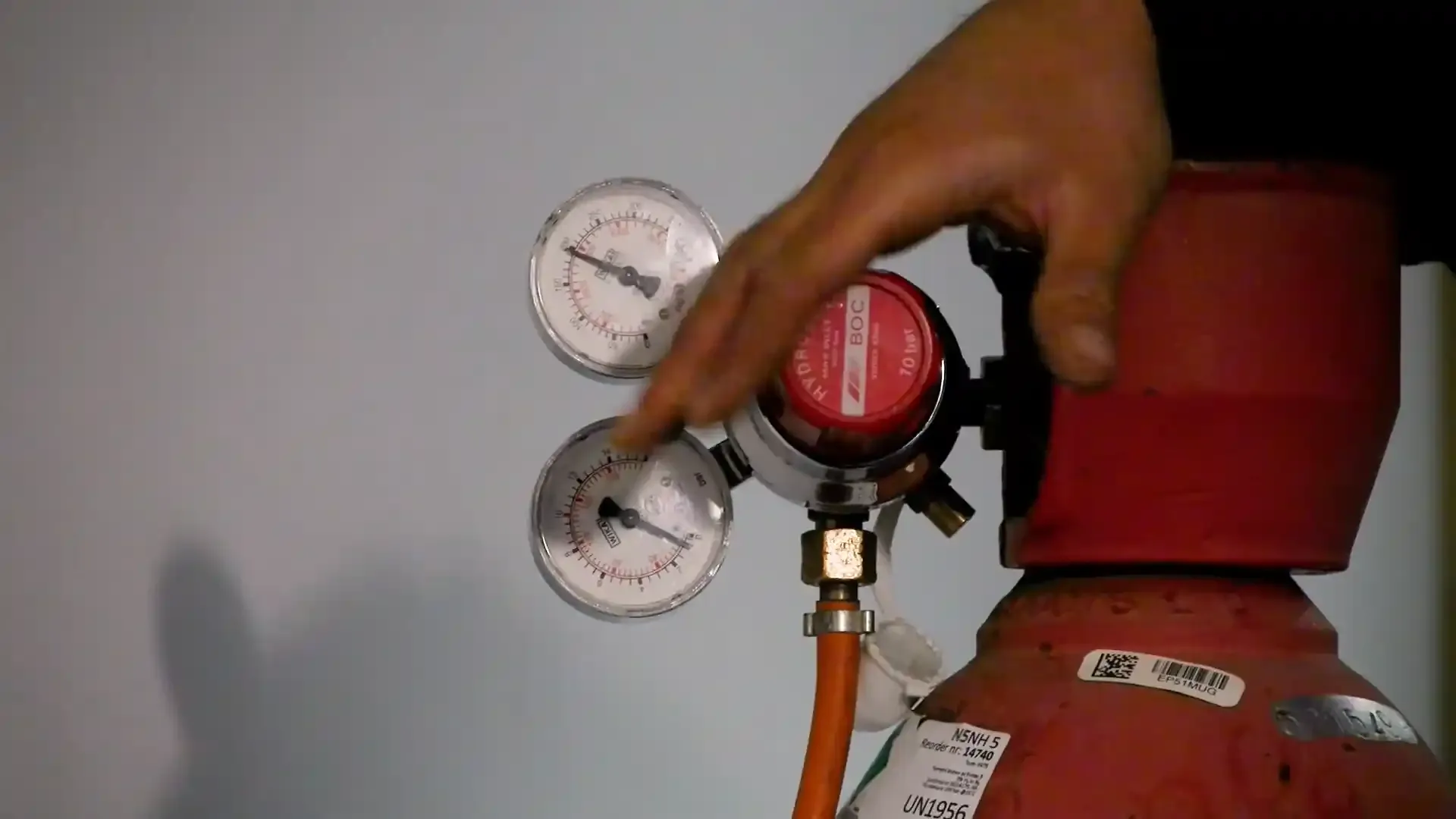
Why Tracer Gas Is the Right Tool for Non-Pressurized Systems
Acoustic leak detection, electronic amplification, and ultrasonic methods all depend on a continuous signal generated by pressurized water escaping through a pipe breach. A supply line at 65 PSI produces an audible and measurable acoustic signal when it leaks: the physics of pressurized flow through a small opening generates the turbulence and vibration that detection equipment is calibrated to find.
Drain lines, sewer laterals, and pool plumbing in its inactive state operate at or near atmospheric pressure. There is no continuous pressurized flow, no turbulence-generating pressure differential, and no acoustic signal for listening equipment to find. A cracked cast iron drain line in a Bessemer home's basement wall leaks only when the drain is in use, and even then, the signal from atmospheric-pressure drain flow through a crack is orders of magnitude weaker than a supply line pinhole at household pressure. Standard acoustic methods produce ambiguous results in these applications.
Tracer gas detection resolves this limitation by introducing its own signal: a gas that migrates through any breach in the pipe regardless of pressure conditions, and detecting that gas at the surface above the failure point.
The Tracer Gas Method: Nitrogen-Hydrogen Mixture
The standard tracer gas mixture used in residential and commercial plumbing leak detection is a combination of approximately 95 percent nitrogen and 5 percent hydrogen (5% H2 / 95% N2). This mixture is non-toxic, non-flammable at 5 percent hydrogen concentration, and non-reactive with pipe materials, soil, water, or human tissue. It meets the safety requirements for use in occupied properties and enclosed spaces.
The pipe section being tested is first drained and isolated at both ends, typically at cleanout access points for drain lines, at the pool equipment shutoffs for pool plumbing, or at isolation valves for specific circuits. The tracer gas is then introduced through one access point at a low positive pressure, enough to drive gas migration through any breach in the pipe wall, but not enough to stress deteriorated pipe sections. For cast iron drain lines in Pueblo County's historic Bessemer and Mesa Junction homes, where the pipe may have significant wall thinning, the low-pressure introduction prevents further damage during testing.
After a waiting period of 15 to 30 minutes, allowing gas to migrate through any breaches and travel upward through soil or building materials: the detector probe is swept at the surface above the tested circuit. The probe contains a semiconductor sensor calibrated to the hydrogen component of the tracer mixture. Any reading above ambient atmospheric hydrogen concentration confirms tracer gas escaping from the pipe below, and the reading peaks directly above the leak location.
The hydrogen component in tracer gas is the detection target, not because hydrogen itself is the tracer, but because hydrogen's small molecular size allows it to migrate through breaches even faster than the nitrogen carrier gas, producing a detectable surface signal earlier and at lower concentration than the nitrogen alone would generate.
Tracer Gas Applications in Pueblo County
Sewer Laterals in Historic Neighborhoods
Cast iron sewer laterals in Bessemer, Mesa Junction, Salt Creek, and Downtown Pueblo are now 70 to 100 years old. Many show multiple small cracks and offset joints that collectively allow sewage leakage into the surrounding soil. Camera inspection identifies where failures exist; tracer gas testing of the full lateral confirms the total extent of the leak field before excavation planning begins, preventing a situation where the first excavation finds and repairs one failure, only to reveal another failure six feet away during backfill.
Pool Plumbing in County Club and Regency Park
Buried pool return and suction lines in established Pueblo County neighborhoods with inground pools are not under continuous pressure when the pump is off. Tracer gas testing of isolated pool plumbing circuits locates failures in these lines without requiring excavation of the full run through poolside decking or landscaping. The repair excavation opens only at the confirmed failure point. Call (303) 552-3896 for tracer gas leak detection throughout Pueblo County.