
Hot Tub Leak Detection in Pueblo County Homes
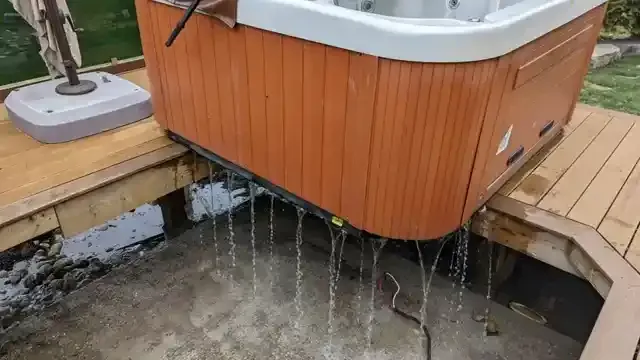
A portable hot tub, the self-contained acrylic shell with an integrated cabinet containing the pump, heater, and plumbing, has significantly more potential leak points than a comparable built-in spa. The plumbing runs within the foam insulation layer surrounding the shell, making visual inspection impossible without access panels. A leak can drip from any jet fitting, any pipe union, any heater connection, or any shell fitting and accumulate in the foam insulation for an extended period before it exits through the cabinet bottom and becomes visible on the ground beneath the unit.
Hot tubs in Pueblo County are common in homes across the Country Club, Highland Park, Belmont, and Regency Park areas, and increasingly in the rural mountain-adjacent communities of Rye and Colorado City where outdoor soaking in a cold-climate setting is a practical year-round amenity.
Systematic Inspection: Starting at the Most Common Sources
Jet Body Leaks
Jet fittings in a portable hot tub use a two-part system: an inner body that threads through the shell from inside the tub, and an outer fitting that connects to the plumbing manifold behind the shell. The interface between the inner body and the shell is sealed with a gasket. When the gasket deteriorates (from years of chemical exposure in the heated water)or the inner body develops a hairline crack in the acrylic, water escapes behind the shell and into the insulation. Dye testing at individual jet bodies with the jets off and the water still locates failing fittings without draining the hot tub entirely.
Pump Union Leaks
The pump in a portable hot tub connects to the plumbing on both the suction and discharge sides with union fittings, threaded couplings with a rubber o-ring seal that allow the pump to be removed for service without cutting the plumbing. Union o-rings deteriorate from heat and chemical exposure over 3 to 5 years. A union leak drips during pump operation and stops when the pump is off: a useful diagnostic indicator that distinguishes it from a jet body or shell crack failure, which loses water continuously.
Accessing pump unions requires opening the hot tub cabinet access panel. The unions are visible in the pump compartment. O-ring replacement is performed after draining the plumbing section; new o-rings are seated dry, the union is hand-tightened and then one quarter-turn with a strap wrench, and the system is refilled and tested for leaks before closing the cabinet.
Heater Connection Failures
The electric or gas heater in a hot tub connects to the plumbing circuit with unions or push-fit fittings. Heater connections are subject to elevated thermal stress: the temperature differential at the heater is greater than anywhere else in the plumbing circuit, and the materials expand and contract accordingly at each heating cycle. Over years of daily operation in a Pueblo County home, this cycling loosens fittings and degrades gaskets. A heater connection leak is typically visible on inspection of the equipment compartment during operation: water drips from the fitting onto the equipment compartment floor.
Pueblo County's cold winters create a freeze risk for hot tubs that are powered down or lose power during cold snaps. Water remaining in the plumbing circuit below the waterline can freeze and crack PVC fittings or split the heater manifold. A hot tub that was improperly winterized or experienced a power outage during a sub-freezing night should be fully inspected before being refilled and restarted.
Shell Cracks and Acrylic Failures
Acrylic hot tub shells develop surface crazing and stress cracks over time from UV exposure, thermal cycling, and physical impacts. Surface crazing in the gel coat is cosmetic and does not leak. A crack that penetrates through the acrylic and the fiberglass backing beneath it leaks water into the insulation. Shell crack repair involves draining the hot tub, sanding and cleaning the crack area, applying fiberglass repair material from the exterior or interior depending on access, and refinishing the gel coat surface. Call (303) 552-3896 for hot tub leak detection and repair throughout Pueblo County.