
Pueblo's Freeze Risk Is Real: The Damage Is Not Always Immediate
Pueblo, Colorado is not Colorado's coldest city, but it is cold enough to freeze pipes, and the freeze damage that occurs during a hard winter cold snap often does not present itself until weeks or months later. This delayed discovery pattern is one of the most common causes of water damage in Pueblo County homes: the pipe cracks in January during a sub-zero night, but the homeowner does not discover the leak until March or April when the outdoor faucet is turned on for the first time and water runs from inside the wall.
Pueblo's average January low is 14 to 20 degrees Fahrenheit, with cold snaps that push below single digits several times most winters. The Sangre de Cristo Mountains to the west and the South Platte-Arkansas drainage geography do not buffer Pueblo from the cold air masses that move through the region. Any outdoor plumbing component left filled with water through these temperatures is at risk.
The Two Freeze Damage Scenarios in Pueblo Homes
Hose Bibs and Frost-Free Sillcocks
Standard hose bibs (the exterior faucets that terminate at the outside wall)retain water between the shutoff valve and the exterior face. When outdoor temperatures drop below freezing and stay there for more than a few hours, the water in this section freezes. Ice expands against the pipe body or the valve housing, and something cracks. The crack is typically inside the wall, at the point where the pipe exits the warm interior and enters the cold exterior zone, not at the exterior face where you could see it.
Frost-free sillcocks are designed to prevent this by locating the shutoff 8 to 12 inches inside the wall in the heated space. But frost-free designs only work when no garden hose is attached during freezing temperatures. A hose left connected to a frost-free sillcock defeats the drainage mechanism: the water cannot drain from the stem back into the heated section because the hose creates backpressure. The stem freezes normally. This is the most common freeze failure in Pueblo County and the one most frequently discovered in spring.
How to Check for Hidden Freeze Damage Now
The Spring Hose Bib Test
Before connecting any hose to an outdoor faucet in spring, open the faucet slowly while watching the interior wall behind it for any indication of moisture. If you have access to the interior wall near the faucet location, in a utility room, a crawlspace, or an unfinished basement. Station yourself there when the outdoor faucet is first opened. Water running inside the wall rather than through the faucet confirms a freeze crack in the interior pipe section. Do not continue running water; close the faucet and call for acoustic detection to locate the crack before it saturates the wall further.
The Static Pressure Test
With all indoor fixtures closed and the outdoor faucets not yet opened for the season, attach a pressure gauge to a hose bib in the closed position. Record the static pressure. Over 10 to 15 minutes with no fixture use, observe whether the pressure reading holds or drops. A pressure drop with all fixtures closed confirms an active leak somewhere in the system, which in spring after a hard Pueblo winter should prompt a full acoustic survey before the outdoor faucets are opened.
Crawlspace and Basement Inspection
In older Highland Park, Eastwood Heights, and Bessemer homes with accessible crawlspaces or basements, a physical inspection of visible supply lines after the winter is worth performing. Signs of past freeze activity: split pipe sections, bulging at a fitting, residual mineral deposits where water has run and evaporated, or soft insulation batts that absorbed moisture and then dried. Any of these findings warrants a pressure test of the supply system before confident restoration of full service.
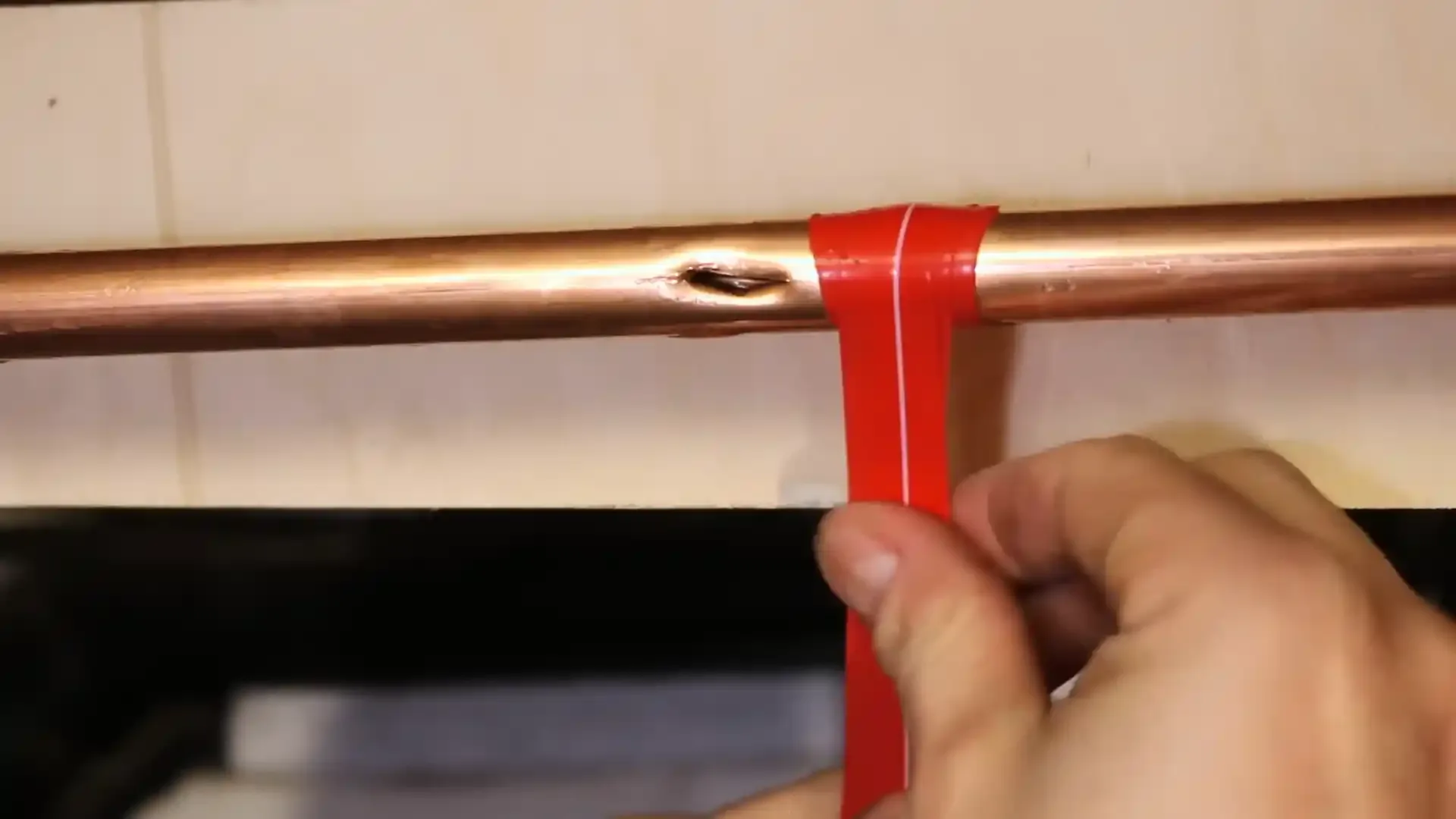
A freeze crack that is discovered in spring rather than in winter has typically been running for weeks in a sealed condition. Freeze cycles alternating with thaw periods during which the crack opens and loses water into the surrounding structure. The sooner it is found and repaired, the lower the wall and framing remediation scope.
Call (303) 552-3896 for freeze damage detection and repair throughout Pueblo County, from the city to the mountain-adjacent communities of Rye, Colorado City, and Beulah where freeze risk is higher and the season is longer.
The Freeze-Crack Timeline: Why Spring Is When Damage Surfaces
Pipe freeze damage in Pueblo County follows a consistent seasonal pattern. The freeze event occurs during a winter cold snap, typically in January or February when Pueblo temperatures drop into the single digits for extended periods. The crack forms in the pipe wall during the freeze. But because the pipe is frozen solid, water cannot flow through the crack until the pipe thaws. The crack may be completely invisible to the homeowner through the entire winter.
| Pipe / Component | Location | Pueblo Freeze Risk | Typical Failure |
|---|---|---|---|
| Hose bib (sillcock) | Exterior wall | Very High | Lengthwise crack in cylinder body |
| Supply runs in uninsulated exterior walls | North-facing wall cavities | High | Pinhole or split at coldest point |
| Supply runs under crawl space | Unheated crawl, perimeter | High , unheated spaces | Split near foundation perimeter |
| Abandoned/seasonal property supply | Entire unheated system | Critical , any pipe can freeze | Multiple events throughout system |
| Supply lines in heated interior walls | Interior partitions | Low | Unlikely if heat maintained |
| PEX in conditioned space | Modern plumbing, indoors | Very Low | PEX tolerates freezing better than copper |
Pueblo averages January lows in the teens with periodic single-digit nights. Colorado City (5,600–6,000 ft), Rye (6,200 ft), and Beulah (6,200–7,500 ft) run 10–15°F colder than Pueblo proper, substantially increasing freeze risk for those communities.
When temperatures rise in March or April and the pipe thaws, water flows normally through the supply system, and through the crack. The first run of outdoor water, the first load of laundry after months of the machine sitting unused, the first time a bathroom faucet on an exterior wall is turned on. Any of these can be the moment when the freeze-cracked pipe expresses its damage as active flow. By this point, the homeowner may have no memory of the cold event that caused it and no warning that anything was wrong.
Pueblo County's real winter lows, averaging single digits in January with periodic sub-zero nights, are severe enough to freeze unprotected exterior plumbing and inadequately insulated interior runs on north-facing exterior walls. Any pipe running through an unheated garage, under a crawl space with inadequate insulation, or along an exterior wall that gets below 32°F during sustained cold is at risk during a Pueblo winter.
How to Test for Hidden Freeze Damage Before It Becomes an Emergency
The static pressure test is the correct tool for checking a Pueblo County home for hidden freeze damage before spring activates the cracks. Close all fixtures in the house. Note the meter reading at the street or note the pressure gauge reading at the pressure tank for well-supplied properties. Wait 15 minutes with no water use. Check again. Any movement confirms active loss somewhere in the system, including through a freeze crack that has not yet been exposed to full flow.
Visual inspection of accessible pipe runs is a useful secondary check. Hose bib connections (the exterior faucets)are the most common freeze failure point in Pueblo County homes. The frost-free sillcock design moves the actual shutoff valve 6 to 12 inches inside the wall, but a cracked sillcock body will show a lengthwise crack or split at the frost-free cylinder that is visible on inspection. Crawl space supply runs near the foundation perimeter are the next most common location. Call (303) 552-3896 for freeze damage detection throughout Pueblo County, acoustic equipment finds hidden freeze cracks before they become emergency events.
Pueblo County Leak? Call Now.
Acoustic and thermal detection locates it first. Same-day dispatch, 24/7.
(303) 552-3896. Call Now