
Hose Bib Leaks in Pueblo County: Freeze Risk Is Real
Pueblo County's semi-arid character and position in the Arkansas River valley create a climate that looks moderate on average but carries genuine winter freeze risk. Average January low temperatures in Pueblo reach 14 to 20 degrees Fahrenheit, and cold snaps push below single digits several times each winter. The Sangre de Cristo Mountains to the west provide minimal cold-air blocking. Arctic air masses that cross the Front Range drop directly into the Pueblo area without the terrain buffering that some northern Colorado foothills communities receive.
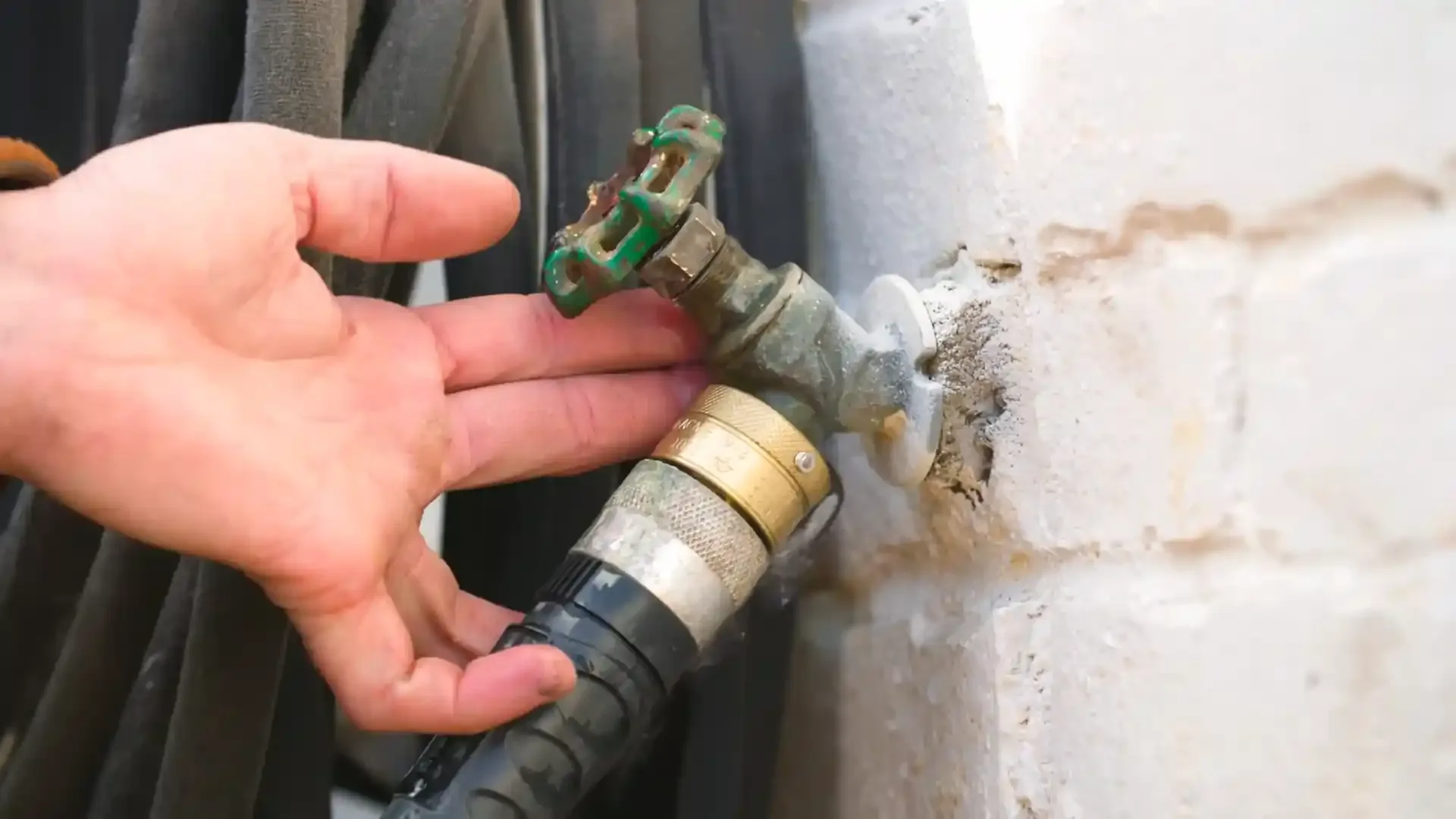
For exterior plumbing, those temperatures matter. A standard hose bib (also called a sillcock or outdoor faucet)has its shutoff mechanism at the wall face. That means the section of pipe behind the shutoff valve, between the valve and the exterior, remains filled with water and exposed to outside temperatures. When outside temperatures drop below freezing and the pipe section is uninsulated, that water freezes, expands, and can split the pipe body or crack the valve housing. The split is typically not visible from outside. It is inside the wall, often in the band joist area just inside the exterior sheathing.
The freeze damage becomes apparent when the hose bib is first used in spring. Water flows normally through the spigot, but simultaneously leaks behind the exterior wall at the crack location. The first evidence inside the house is often a water stain at the wall base below the exterior faucet location, or moisture in the crawlspace under that section of wall.
Frost-Free Sillcocks: The Common Misunderstanding
Many Pueblo County homes built after the 1980s have frost-free sillcocks rather than standard hose bibs. A frost-free sillcock has a longer stem (typically 8 to 12 inches)that extends the shutoff mechanism deep into the heated interior of the wall, where temperatures stay above freezing. When the faucet handle is closed, water drains from the exterior portion of the stem back into the interior pipe, leaving the exposed section empty and preventing freeze damage.
This design works correctly only when no garden hose is attached during freezing temperatures. A hose left attached to a frost-free sillcock blocks the drainage path. Water cannot drain from the stem back into the house because the hose creates backpressure. The stem section fills with water and freezes normally despite the frost-free design, producing the same split-stem failure as a standard hose bib. This is the most common hose bib freeze failure in Pueblo County's established residential neighborhoods.
The fix is straightforward in concept: detach the garden hose before the first hard freeze. But in Pueblo County, where the first hard freeze can occur abruptly in October or November, the hose that was used to water through an Indian summer period gets left attached and the pipe fails that night.
Non-Freeze Hose Bib Failures in Pueblo County
Not all hose bib leaks result from freeze damage. Worn packing around the stem: the material that seals the valve stem where it passes through the faucet body, deteriorates with years of use and produces a drip around the handle that runs down the outside of the faucet and the wall. Packing nut tightening resolves early-stage packing wear; packing replacement is needed when tightening no longer holds.
The washer inside the hose bib valve seat wears with repeated use: the same failure mode as any compression faucet. A drip from the spout when the faucet is closed indicates a worn seat washer. In Pueblo County's hard water environment, mineral scale on the brass seat can accelerate the wear of the rubber washer, producing a drip earlier than the washer's designed service life would suggest. Call (303) 552-3896 for hose bib repair throughout Pueblo County — including rural properties in Avondale, Boone, Rye, and Colorado City where multiple exterior faucets serve outbuildings and agricultural connections.