
What a Running Toilet Actually Means and What It Costs
A toilet that runs continuously or cycles on every few minutes is wasting water that the Pueblo Board of Water Works bills precisely and without rounding. The consumption loss from a running toilet depends on the failure type: a slowly seeping flapper loses less per hour than a fill valve that runs continuously at full flow, but even a modest seep adds up significantly across a billing cycle.
A toilet losing water at a rate that produces an audible running sound is losing at a rate that will add several thousand gallons to a monthly bill. A toilet with a silent seep through a worn flapper (one that you do not hear but the dye test confirms)typically adds 1,000 to 3,000 gallons per month. At Pueblo Water rates, that is a line item on the statement that compounds month after month while the underlying cause goes unaddressed.
The Three Running Toilet Sources in Pueblo County Homes
The Flapper: Seep Without Sound
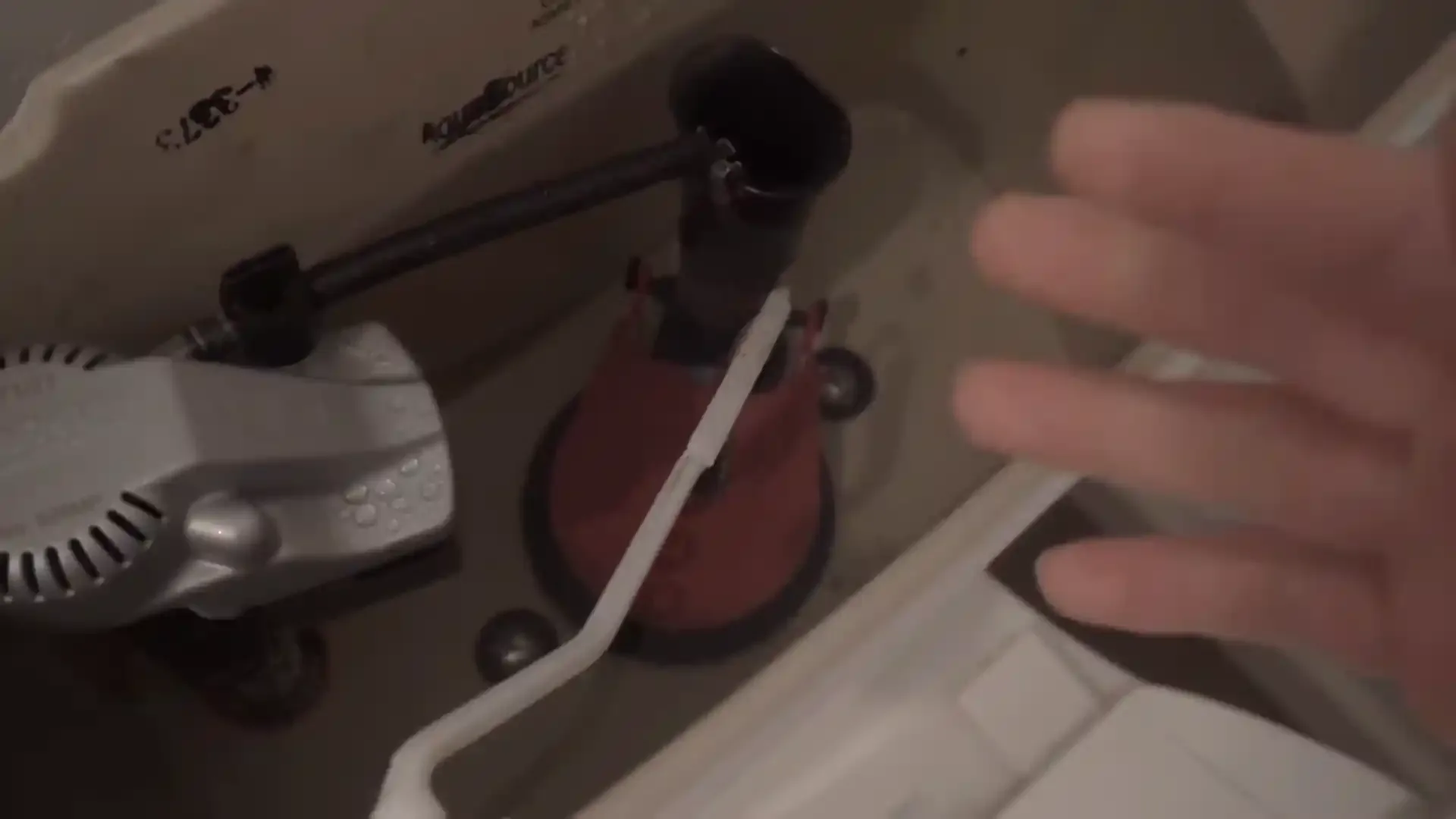
The flapper is the rubber seal at the bottom of the toilet tank that closes over the flush valve opening between flushes. When the flapper hardens, warps, or develops mineral scale on its seating surface, all of which happen in Pueblo County homes with 180 mg/L hard water over years of toilet use, it no longer creates a watertight seal. Water seeps continuously from the tank into the bowl and down the drain.
The distinguishing characteristic of a flapper failure is that it is often inaudible. The flow rate through a worn flapper is slow enough that it does not produce the rushing-water sound most homeowners associate with a running toilet. The only way to confirm it without taking the lid off the tank is the dye test: add a few drops of food coloring to the tank, wait 10 minutes without flushing, and check the bowl. Color in the bowl confirms water is moving from tank to bowl through the flapper.
In Pueblo County homes with older toilets (Country Club, Highland Park, and Eastwood Heights homes where the fixture may date to the 1970s or 1980s: the flush valve seat itself may have developed corrosion pitting from Pueblo's hard water that prevents any flapper from sealing properly. In this case, seat replacement or full flush valve replacement is needed rather than just a new flapper.
The Fill Valve: Audible Running
The fill valve controls water entry into the tank after each flush. When the fill valve's float mechanism does not shut off at the correct water level, water enters the tank continuously and exits through the overflow tube (the vertical tube inside the tank)directly into the bowl. This produces the familiar audible running sound: water running for more than 90 seconds after a flush, or cycling on every few minutes without any flush having occurred.
Confirming overflow tube discharge is straightforward: lift the tank lid and observe whether water is running over the edge of the overflow tube. If it is, the fill valve is not shutting off at the correct level. Adjusting the float, lowering the cutoff level so the fill valve shuts off before water reaches the overflow tube, resolves the symptom in some cases. When the fill valve itself is deteriorated from Pueblo's hard water mineral scale on internal components, replacement is the correct repair.
Something Worse: Wax Ring or Tank Crack
A toilet that appears to run (or that produces an unexplained water bill increase)is not always a tank problem. A failed wax ring at the toilet base allows wastewater to escape the floor seal with each flush. This produces moisture at the toilet base rather than tank noise, but can be misidentified as a "running toilet" because it correlates with toilet use. The diagnostic indicator is the location of the moisture: a running toilet produces sound from the tank; a wax ring failure produces moisture at the floor around the toilet base.
A cracked toilet tank produces external seepage: a wet surface on the outside of the tank that runs down to pool at the base. This is not a running-toilet noise problem but a structural tank failure. It is not repairable and requires tank replacement. When the fix for a "running toilet" is not resolved by flapper or fill valve repair, the toilet base and tank exterior should be inspected as possible alternative sources before a more extensive diagnosis is begun. Call (303) 552-3896 for toilet leak detection and repair throughout Pueblo County.
How Much a Running Toilet Costs in Pueblo County
The Pueblo Board of Water Works bills residential customers in tiered rate structures. The exact rate per unit (CCF, hundred cubic feet) varies by tier and is updated periodically, but the math on a running toilet is consistent regardless of the specific rate: a toilet losing water at a rate audible as a running sound is losing at a minimum of 2 gallons per minute. At that rate, running 30 minutes per hour: a conservative estimate for a fill valve that cycles on frequently, adds 1,440 gallons per day, or roughly 43,000 gallons per month.
Pueblo Water bills in CCF (hundred cubic feet), where one CCF equals approximately 748 gallons. A toilet adding 43,000 gallons per month adds roughly 57 CCF per month to the meter reading. At typical Pueblo Water residential rates in the higher tiers, this represents a 40 to 90 dollar per month increase depending on where the usage falls in the tier structure. A slow flapper seep adding 2,000 gallons per month (below the running-sound threshold) adds roughly 3 CCF, a 5 to 15 dollar per month increase that accumulates quietly across multiple billing cycles.
Confirming a Toilet Leak With Pueblo Water's Meter
The street meter serves as a definitive confirmation tool for any suspected toilet leak. If you have done the dye test and it came back positive, or if you suspect the fill valve is cycling but can not hear it clearly, the meter confirms active loss. Close every other fixture in the house, no dishwasher, no washing machine, no running faucets. Then check whether the meter is moving. On a Pueblo Water AMR (automated meter reading) meter, the small dial or digital display will show movement in real time if any water is flowing through the system. With every fixture closed except the potentially leaking toilet, any meter movement points directly at the toilet.
This same test confirms whether a recently repaired toilet is actually holding after the flapper or fill valve replacement. Run the repair, wait 10 minutes, close all other fixtures, check the meter. Movement indicates the repair did not fully resolve the loss. Either the flapper is not seating on a pitted flush valve seat, or the fill valve replacement introduced a new issue. A clean meter reading with all fixtures closed and the toilet tank at rest confirms the repair is complete. Call (303) 552-3896 for toilet and plumbing leak detection throughout Pueblo County.
Leak Near You in Pueblo County?
We pick up any time, day or night. Detection first, repair second, 24/7 throughout Pueblo County.
(303) 552-3896 — Call Now