
The Silent Toilet Tank Leak: Pueblo County's Most Overlooked Water Waste
A toilet tank that leaks into the bowl is the most common invisible water waste in Pueblo County homes, and the most frequently dismissed before a water bill comparison makes the scale clear. The leak produces no water on the floor, no visible drip, and often no audible sound. Water moves silently from the tank through the leaking flapper valve into the bowl and down the drain. The Pueblo Board of Water Works meter at the street measures every gallon that passes through: a continuously running toilet can add 200 gallons per day to a household's consumption without a single visual indicator.
In Pueblo County's mid-century housing stock, the Belmont, Country Club, Sunset Park, and Regency Park neighborhoods with homes built in the 1960s through 1980s, toilet fixtures may still have their original flappers and fill valves from the 1990s or early 2000s when last updated. Flapper rubber hardens and loses its sealing capability over time. Pueblo's moderately hard water at 180 mg/L contributes to mineral scale buildup on the flapper seat surface, which prevents the hardened flapper from creating a watertight seal even when the rubber itself has not yet fully failed.
Diagnosing the Toilet Tank Failure Type
The Dye Test
The simplest confirmation of a tank-to-bowl leak is a dye test. A small amount of food coloring or a dye tablet is placed in the tank with the toilet not in use. The bowl water is observed for 10 to 15 minutes without flushing. If colored water appears in the bowl, water is moving from the tank through the flush valve, confirming a leaking flapper. The rate of color appearance indicates severity: a faint tinge after 15 minutes suggests a slow seep; a visible plume within two minutes indicates a significant flow rate.
Flapper Valve Failure
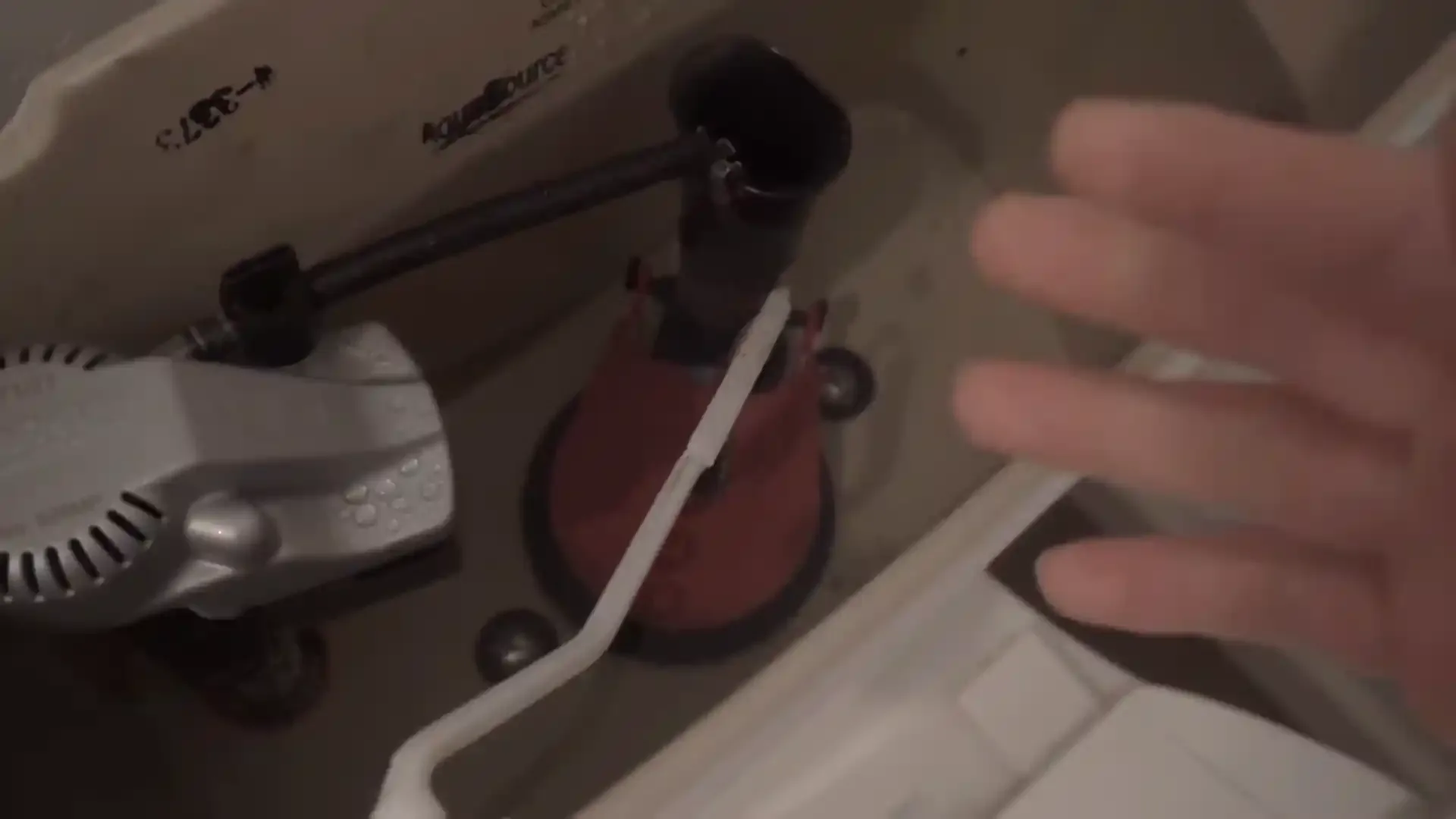
The flapper is a rubber disc or seat cover that seals the flush valve opening at the bottom of the tank. When closed between flushes, it creates a watertight seal preventing tank water from entering the bowl. Flapper failure occurs in two ways: the rubber warps, hardens, or cracks, losing its seating conformability; or mineral scale from Pueblo's hard water deposits on the brass or plastic flush valve seat, creating surface irregularities the flapper cannot seal against even if the rubber is still pliable.
Flapper replacement is the most common toilet repair in Pueblo County. The flapper is unclipped from the flush valve ears, the fill chain is disconnected, and the new flapper is installed in reverse. The toilet is flushed to confirm tank refill to the correct level, and the dye test is repeated to confirm the seal. If the dye test still shows color transfer with a new flapper, the flush valve seat has mineral deposits or physical damage that requires seat resurfacing or flush valve replacement.
Fill Valve Failure
The fill valve controls water entry into the tank after each flush. A fill valve that does not shut off at the correct water level allows the tank to overfill: the excess water overflows the overflow tube into the bowl continuously. This produces the audible running-water sound that homeowners associate with a "running toilet." The overflow tube is visible inside the tank; if water is flowing down the overflow tube with the toilet not recently flushed, the fill valve is not shutting off correctly.
Fill valve adjustment, raising or lowering the float mechanism to achieve the correct shutoff level, resolves overfill in some cases. Fill valves that are scaled, worn internally, or simply at the end of their service life require replacement. In Pueblo County's hard water environment, fill valve internal components scale significantly over 8 to 10 years of service, leading to premature overfill or failure-to-fill failures.
A toilet with a fill valve that runs audibly for more than 90 seconds after each flush is wasting water on every cycle. At 10 flushes per day with a 2-minute run-on per flush, that is 20 minutes of continuous fill valve flow daily, a meaningful water loss over a month's billing cycle.
Tank Crack Seepage
A hairline crack in the porcelain tank body produces a slow seep that runs down the outside of the tank and pools on the tank lid or at the toilet base. This failure is distinct from all the above. Water is escaping the tank body itself rather than through a valve or seal. Porcelain tank cracks are not repairable; the tank requires replacement. In Pueblo County's older housing stock where original 1960s or 1970s toilet fixtures remain, a cracked tank is typically the prompt to replace the full toilet with a modern low-flow unit. Call (303) 552-3896 for toilet tank leak detection and repair throughout Pueblo County.