Washing Machine Leaks in Pueblo County: The Supply Hose Risk
The supply hoses that connect a washing machine to the household hot and cold water valves are among the highest-risk plumbing components in a Pueblo County home, not because failure is inevitable, but because when failure occurs, the consequences are immediate and severe. A rubber washing machine supply hose that ruptures at the wall connection releases the full flow of a pressurized supply line into the laundry room, flowing continuously until someone shuts off the water. A hose that fails while the occupants are away can release thousands of gallons before it is discovered.
Rubber washing machine supply hoses have a typical service life of 3 to 5 years. Braided stainless hoses last 8 to 10 years or longer. In Pueblo County's mid-century Belmont, Lakeview, and Highland Park homes where the washing machine may have been installed in the 1990s or 2000s and the original rubber hoses have never been replaced, those hoses are past their designed service life. The external appearance of a rubber hose provides no reliable indication of internal deterioration: a hose that looks intact can fail at the fitting connection without warning.
The single most cost-effective washing machine leak prevention measure in a Pueblo County home is replacing original rubber supply hoses with braided stainless before failure occurs. The cost of hose replacement is a small fraction of the water damage remediation cost from a hose rupture.
Active Washing Machine Leak Sources
Supply Hose and Valve Connection Failures
Active supply hose failures range from slow seeps at the threaded connection to complete hose rupture. A seeping connection at the washer inlet or the wall valve drips during fill cycles and pools behind the machine, often unnoticed until the laundry room floor shows moisture or the wall behind the machine develops a stain. Tightening the connection resolves minor thread seeps; a hose showing cracking, bulging at the braiding, or corrosion at the fittings should be replaced regardless of whether it is actively leaking.
The shutoff valves at the laundry connection, hot and cold supply valves mounted to the wall behind the washer, can develop packing failures that produce a slow drip down the valve body and the wall behind the unit. These valves are often operated rarely and can seize in the open position, complicating repair. A valve that cannot be closed fully for service access should be addressed as part of the supply hose or valve replacement scope.
Drum Seal and Bearing Failures in Front-Load Machines
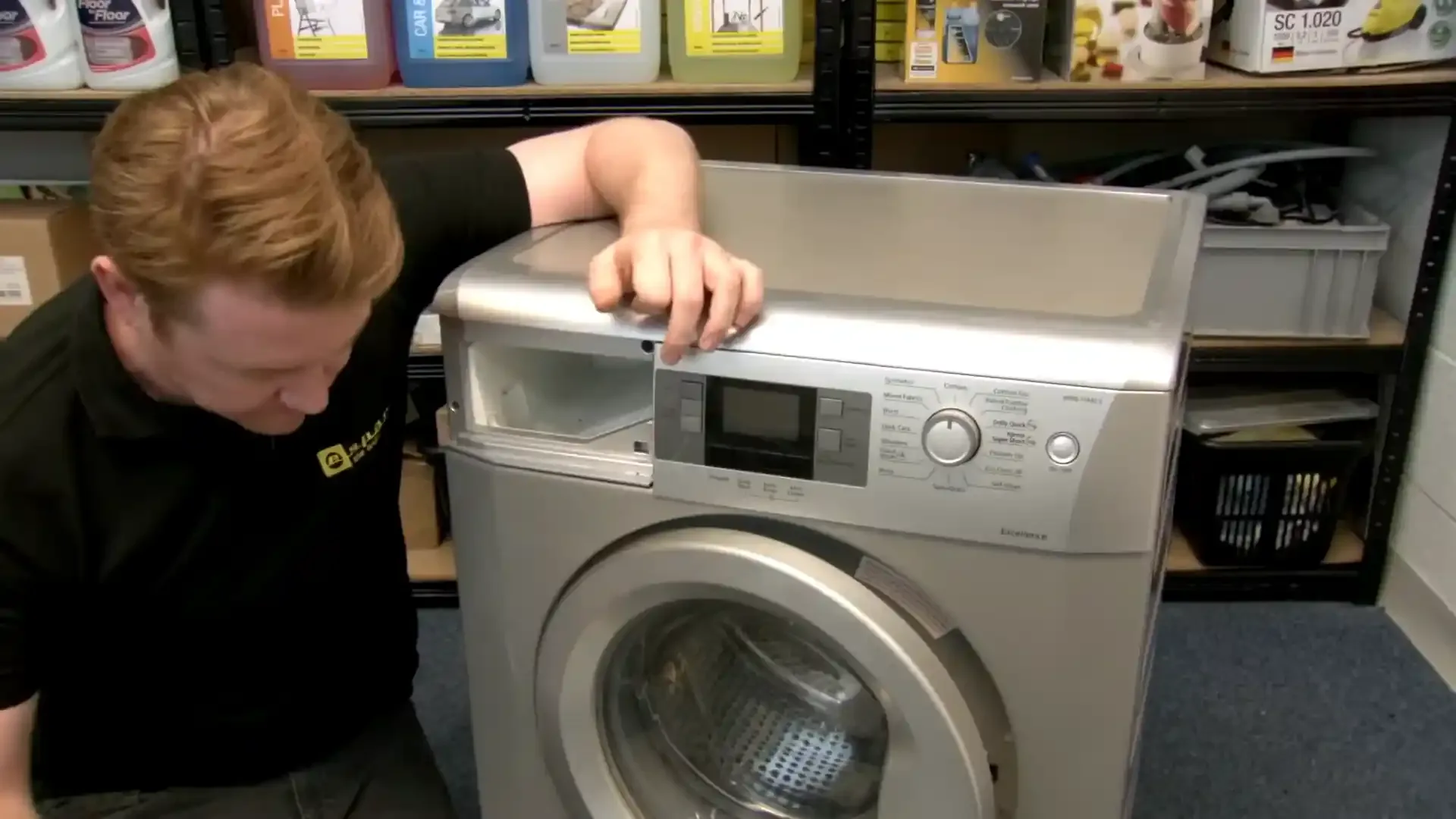
Front-load washing machines use a rubber door boot seal, a bellows-style gasket that seals the drum opening against the machine front panel. When this seal tears, mold accumulates in the bellows folds, and water leaks from the front of the machine during wash cycles. Boot seal replacement is a straightforward repair on most front-load models.
More significant front-load failures involve the drum bearing and rear drum seal. When the bearing fails, the drum wobbles during spin cycles, stressing the rear drum seal and causing a water leak from the machine's bottom-rear area. Drum bearing and seal replacement is a labor-intensive repair; for older units, the repair cost relative to replacement cost should be evaluated honestly before proceeding.
Drain Pump and Hose Failures
The drain pump moves wash water from the drum to the standpipe or utility sink during the drain cycle. Pump failures, cracked pump housing, failed pump seal, or blocked pump impeller, produce water beneath the machine during drain phases. The drain hose connection from pump to standpipe can also loosen or crack, leaking during drain. In Pueblo County's hard water environment, mineral deposits in the drain pump filter are a common contributing factor to pump stress and premature failure: a filter that is never cleaned forces the pump to work against restriction. Call (303) 552-3896 for washing machine leak detection and repair throughout Pueblo County.