
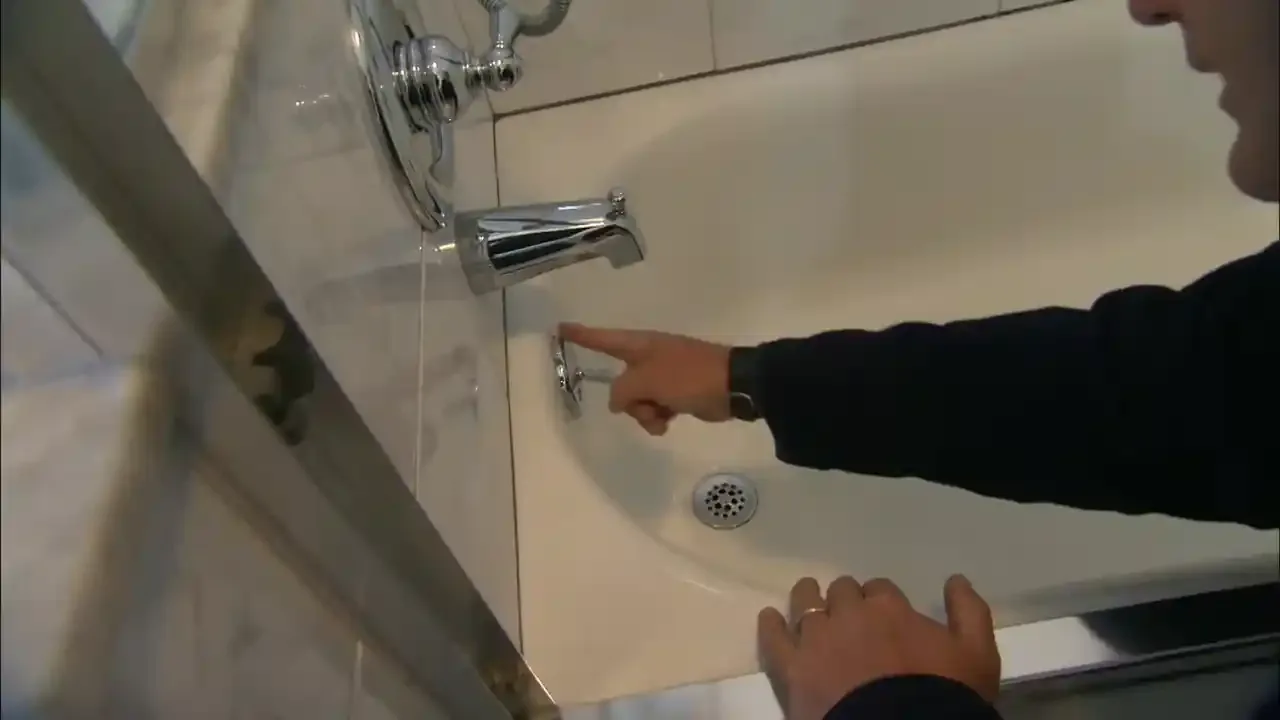
Bathtub Leaks in Pueblo County: Four Distinct Sources
A bathtub appears as a single fixture, but it is a system with four distinct potential leak sources. Knowing which is active determines the entire repair approach, and misidentifying the source produces a repair that resolves the wrong component while the actual failure continues.
Drain Body and Connection Failure
The bathtub drain body is the metal flange visible at the tub floor. It connects below the tub to the drain shoe, which in turn connects to the P-trap and drain line. In older Pueblo County homes. Bessemer, Highland Park, Salt Creek, and Eastwood Heights properties from the 1940s through 1960s, original cast iron or early PVC drain body assemblies are decades old. The connection between the tub shoe and the drain pipe corrodes, loosens at the rubber gasket, or cracks at the fitting.
A drain body failure leaks whenever the tub drains, not when it fills. The flood test distinguishes it: fill the tub to a normal depth and check the drain connection below for moisture without pulling the drain. Then release the drain and observe the connection as water flows. Dripping during drainage but not during fill confirms the drain body rather than the tub liner as the source.
Overflow Plate and Connection Failure
The overflow plate (the circular cover on the tub wall above the drain)connects to a drain pipe inside the wall that serves as an emergency overflow path when the tub fills too high. The overflow plate is sealed against the tub wall with a gasket. When this gasket fails, every overflow event (and in some tubs, even normal high-water bathing)sends water directly into the wall cavity behind the tub.
Overflow gasket failure is common in older Pueblo County tubs where the original gasket material has hardened and lost compliance. It is also frequently caused by overtightening the plate screws, which compresses and cracks the gasket. Water from an overflow gasket failure runs behind the tub into the wall cavity and floor below, producing a wet subfloor that extends behind the tub rather than directly under the drain, which is a useful diagnostic indicator.
Tub Liner and Surround Failure
Many Pueblo County homes had fiberglass or acrylic liner panels installed over their original ceramic tile surrounds during bathroom renovations in the 1990s and 2000s. These panels are sealed with caulk at the corners and seams. As caulk ages, it shrinks, cracks, and peels, particularly at the horizontal ledge of the tub rim where water pools. When the caulk seal fails, water penetrates behind the liner and into the wall or subfloor without any surface indication in the tub itself.
Caulk at the tub-to-wall junction that is discolored, pulling away, or visibly cracked is not a cosmetic issue, it is an active water entry point. Recaulking alone resolves this when the substrate behind has not yet been saturated; if it has, the liner and backer must be evaluated for damage before recaulking.
Supply and Valve Connection Failures
The tub spout, showerhead riser, and diverter valve are supply-side connections that can develop leaks at their wall interface or at internal packing. A tub spout that drips continuously when the diverter is in shower mode, or a valve stem that seeps around the handle, adds water to the wall cavity around the valve body. In Pueblo County's older tub installations with two-handle compression valves (common in Bessemer and Eastwood Heights era homes)the packing nuts behind the handles corrode and fail to retain the stem seal. Repacking or replacing the valve stems resolves these failures. Call (303) 552-3896 for bathtub leak detection and repair anywhere in Pueblo County.