
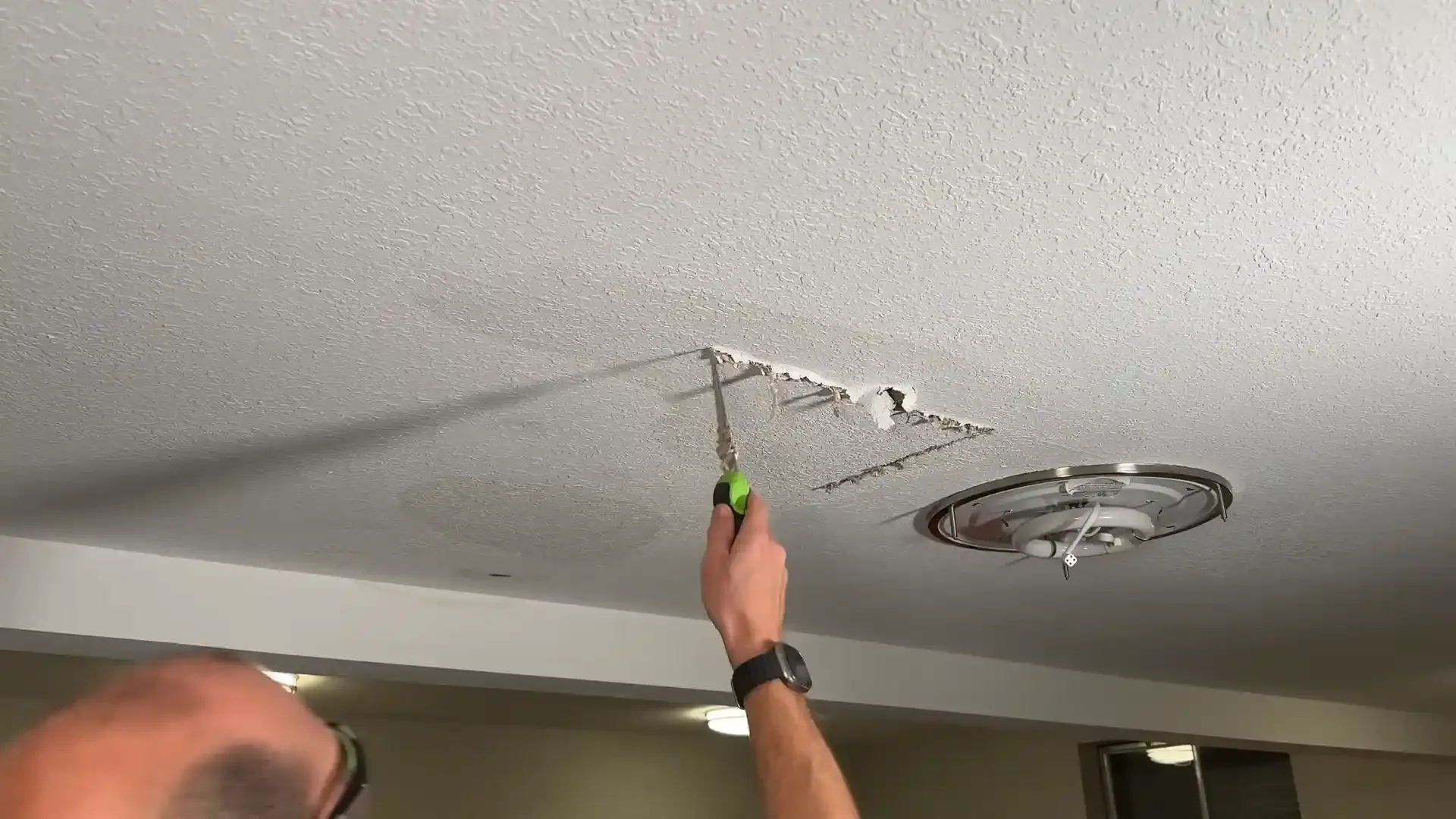
Why Ceiling Stains in Pueblo County Homes Require Systematic Detection
A brown or yellow stain on a ceiling is one of the most common leak presentations in Pueblo County homes, and one of the most misleading. Water that enters a structure at one point travels along framing members, insulation batts, and subfloor decking before accumulating at a low point and dripping through the ceiling finish. The stain can appear two, four, or more feet from the actual leak source.
In Pueblo County's two-story homes, ceiling stains in first-floor rooms almost always originate from plumbing above, a bathroom, laundry room, or kitchen on the second floor. In single-story homes with a crawlspace or slab, a ceiling stain in a room below attic space indicates either a roof penetration failure or a duct condensation problem. In single-story homes with no attic access below the leak zone, the source is a plumbing line running through the ceiling joist space.
The historic Bessemer, Highland Park, and Eastwood Heights neighborhoods contain a significant number of multi-story homes built during the CF&I steel mill era and post-WWII expansion. These properties have seen decades of plumbing use, and the ceiling stain in the dining room below the upstairs bathroom is a presenting complaint we see repeatedly. The stain has often been painted over once or twice before a homeowner decides to find the source, meaning the leak has been intermittent or slow for an extended period.
Tracing Ceiling Leaks to Their Source
The first step is categorizing whether the stain is active, dry, or intermittent. An active stain that is wet to the touch or growing indicates an ongoing supply-side leak or a consistent drain failure. A dry stain that has not grown recently suggests either an intermittent drain leak (only leaks when the fixture above is used), a past leak that has since stopped, or a roof intrusion that only occurs during specific weather conditions.
For suspected plumbing sources, we systematically run each fixture above the stain area in sequence, shower, tub, toilet flush, sink drain, while monitoring the ceiling surface for active dripping or moisture change. This isolates the fixture involved without opening the ceiling. Moisture meters applied to the drywall surface around the stain map the extent of wet material and suggest which direction the water traveled before accumulating, pointing back toward the source rather than the collection point.
Opening ceiling drywall before the source is confirmed produces two problems: you may miss the failure point entirely, and you create patch work that needs finishing regardless of whether you found the leak. Detection first is what separates targeted repair from exploratory demolition.
Common Ceiling Leak Sources in Pueblo County Homes
Shower Pan and Drain Above
A ceiling stain directly below a first-floor bathroom in a two-story Pueblo home most commonly traces to the shower pan liner, the drain connection, or the toilet wax ring above. The flood test on the shower, combined with careful fixture-by-fixture testing, identifies which of these is active. Shower pan liner failures in the 1960s and 1970s mortar-bed showers common in Belmont and Country Club are a frequent source.
Pinhole Copper Leak in Ceiling Joist Space
A supply line pinhole leak in the ceiling joist space drips slowly onto the ceiling drywall from above. In Pueblo County's copper-era mid-century homes, hot water supply lines running horizontally through ceiling joists to upstairs bathrooms are in the pinhole failure window. Acoustic detection and thermal imaging locate these without requiring ceiling access until the repair point is precisely identified.
Condensation and HVAC Sources
In Pueblo's warm dry summers, an HVAC evaporator coil condensate drain that is partially blocked can overflow and drip into ceiling space. This presents as a seasonal ceiling stain that appears in summer and resolves when the system is shut down: the pattern distinguishes it from a plumbing leak. We identify the source and route, and the appropriate repair is drain line clearing or rerouting rather than pipe repair. Call (303) 552-3896 for ceiling leak detection anywhere in Pueblo County.