
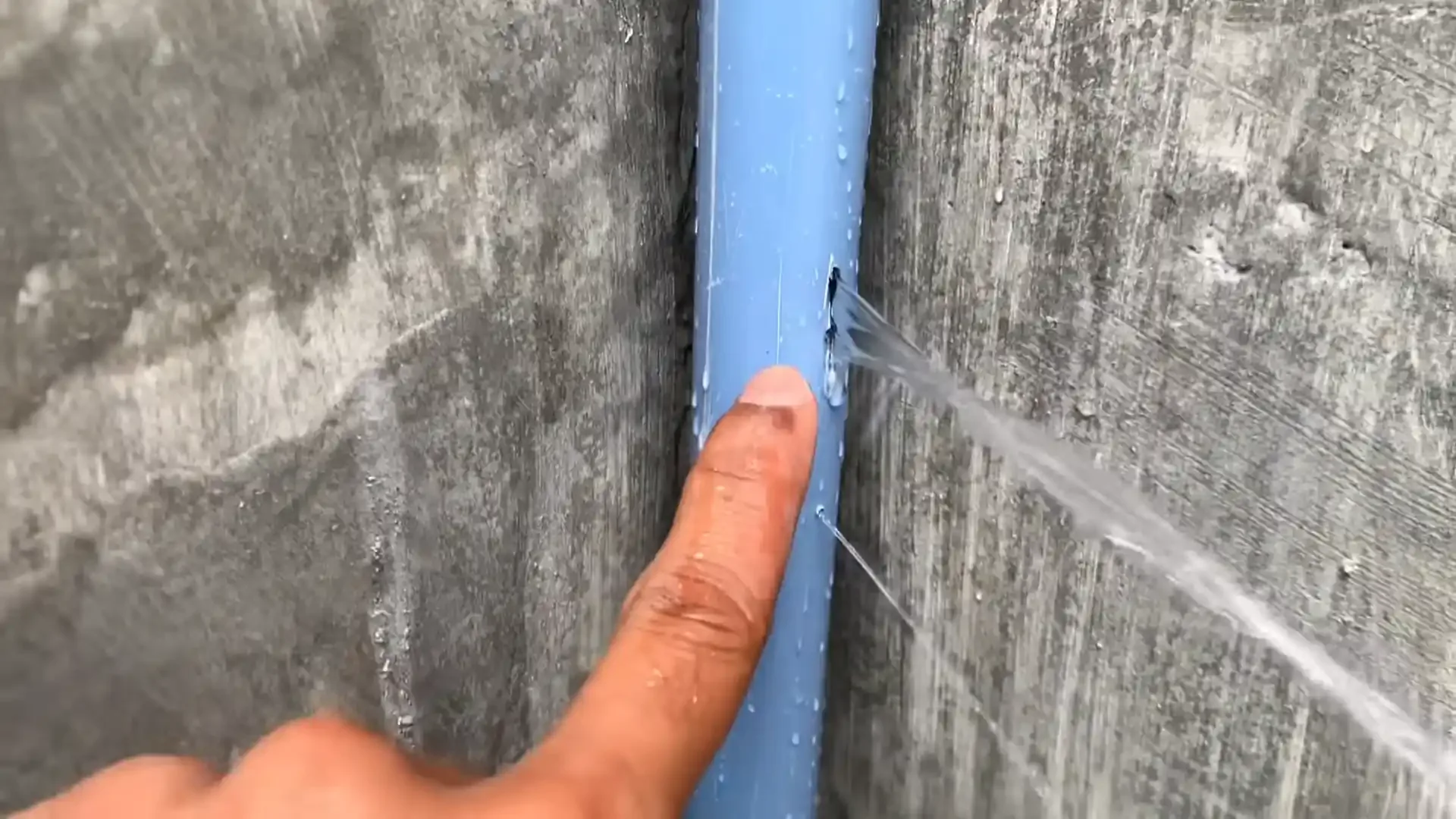
Pipeline Leaks in Pueblo County: Scale and Detection Challenge
The term pipeline refers to a water supply line of significant length, longer than a typical residential service line, serving multiple structures, or carrying water across a substantial distance on a rural Pueblo County property. The scale that makes these systems economically valuable also makes their leaks difficult to locate with standard residential detection methods.
In Pueblo County, pipeline leak scenarios include shared main lines serving multiple agricultural or residential structures in the Avondale, Boone, Florence, and Penrose areas east and west of the city; long irrigation distribution mains on larger properties in the Vineland and rural south Pueblo County areas; and multi-building supply lines in commercial or institutional settings within the City of Pueblo. Each shares a defining characteristic: the line carries water under pressure across a run long enough that a moderate leak can go undetected for weeks while losing significant water volume.
A pipeline losing water at a continuous moderate rate is often invisible at the surface for an extended period. The leak plume migrates through soil, disperses, and may not surface visibly for some distance from the actual failure point, or at all, if it drains to a sub-surface drainage layer. The only reliable early indicator is a usage comparison at the meter: more water entering the system than can be accounted for by legitimate use. In rural Pueblo County where irrigation use obscures baseline consumption, that comparison requires intentional tracking rather than passive observation.
Correlator Detection for Long Pipeline Runs
Standard acoustic listening equipment is effective for locating leaks in residential pipe runs of up to 100 feet or so. For longer pipeline runs, the leak sound attenuates over distance and becomes indistinguishable from ambient noise before it reaches a listening probe at the pipe endpoints. Acoustic correlator technology addresses this directly.
A correlator uses two synchronized sensors placed at known points on the pipeline, typically at valves, access fittings, or exposed pipe sections. Both sensors record the sound of the leak simultaneously. Because sound travels through the pipe at a calculable speed based on the pipe material and diameter, the difference in arrival time at the two sensors (measured in milliseconds)calculates to a precise distance from each sensor to the leak source. For a 300-foot pipeline section, the correlator can locate the failure to within two to three feet without any excavation.
Correlator detection is what makes long-run pipeline repair economically rational. Without it, locating a failure in a 200-foot buried line means either excavating the full run or digging at multiple guess points, each of which is expensive and destructive. Detection first is the only efficient approach.
Pipeline Repair Approaches in Pueblo County
Targeted Excavation at Confirmed Location
Once correlator detection identifies the failure point, a single excavation opens the line at that location. The failure, whether a corroded joint, a split section, or a root-damaged fitting, is removed and replaced. The trench is backfilled and compacted. In rural Pueblo County's agricultural areas, surface restoration is typically straightforward, graded soil or gravel rather than the concrete and landscaping that complicate urban residential repair.
Trenchless Replacement for Deteriorated Runs
When camera inspection or correlator analysis reveals a pipeline that is failing at multiple points along its length, common in older galvanized distribution mains in rural Pueblo County properties, trenchless pipe bursting or directional boring replaces the full run without trenching its length. The old pipe is abandoned in place or burst outward as new HDPE or PVC pulls through. For lines running across agricultural fields or under roads in the Avondale, Boone, and Penrose areas, this method eliminates the disruption of full-length excavation. Call (303) 552-3896 for pipeline leak detection and repair throughout Pueblo County and the surrounding region.