
Inground Pool Leaks in Pueblo County: The Clay Soil Factor
An inground pool leak in Pueblo County is structurally different from an above-ground pool leak. The shell, plumbing lines, and fittings are embedded in soil that shifts measurably across seasons. Bentonite clay beneath and around the pool expands when it absorbs moisture and contracts through Pueblo's dry summers. That repeated movement opens gaps at pipe penetrations, cracks shell fittings, and separates plumbing unions in ways that above-ground pool hardware does not experience. The leak path, the detection method, and the repair approach are all distinct because the structure is.
A concrete or fiberglass inground pool shell is rigid. When the soil beneath and around it moves, the shell resists but cannot accommodate the movement indefinitely. Over years of wet-dry cycling driven by Pueblo County's irrigation patterns, monsoon rainfall, and dry periods, stress concentrates at the pool's structural weakest points: the return fitting penetrations in the pool wall, the main drain collar, the skimmer throat connection, and any existing repair patches. These become leak entry points.
This failure pattern is distinct from what pool owners in stable-soil markets experience, and it is worth naming clearly: an inground pool in Pueblo County's clay-soil zones may develop structural leaks earlier than its theoretical service life would suggest, not because of poor construction, but because the soil beneath it is moving.
Establishing Whether an Inground Pool Is Leaking
The bucket test is the standard first step. A bucket filled with pool water and placed on a pool step at the waterline level evaporates at the same rate as the pool surface. After 24 hours with the pump off, a pool losing more water than the bucket has confirmed a leak rather than evaporation. During summer months in Pueblo County's high-altitude dry climate, evaporation alone can account for a significant water loss rate: the bucket test prevents unnecessary leak hunting when evaporation is the real cause.
If the pool loses more water with the pump running than with it off, the leak is in the pressurized plumbing system rather than the shell. If the loss rate is the same regardless of pump operation, the leak is structural. This distinction narrows the detection method before equipment is deployed.
Structural Inground Pool Leak Detection
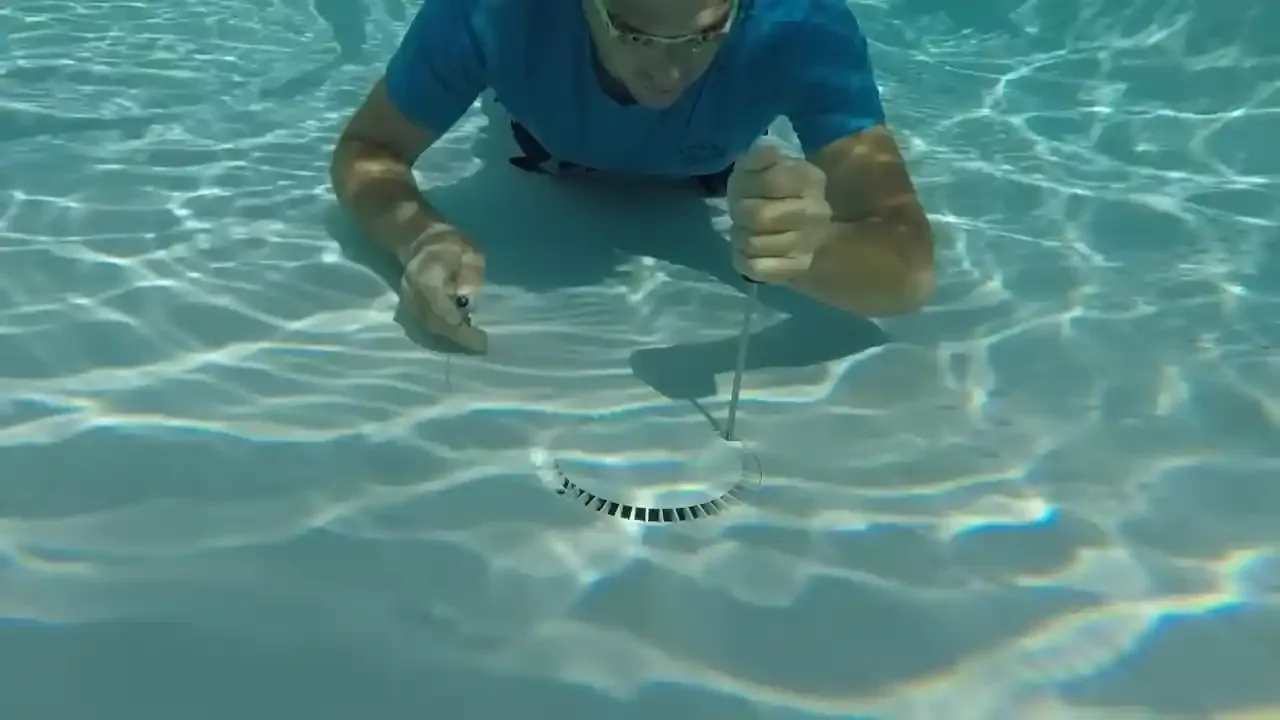
Dye testing surveys the pool shell interior systematically: fitting penetrations, skimmer connections, main drain perimeter, any visible cracks or repaired areas, and the steps and benches where the shell thickness changes. A dye syringe releases a small tracer near each potential failure point while the water is still. Active leak points draw the dye through the shell; non-leaking areas allow the dye to disperse into the pool water without directional movement.
Dye testing can be performed without draining the pool. This matters for Pueblo County homeowners whose pools are filled with treated water that represents a significant refilling cost at Pueblo Water rates.
Pool Plumbing Leak Detection and Repair
Buried return lines and suction lines are pressure-tested in isolation. A drop in pressure with the line isolated from the pool confirms a pipe leak in that specific run. Electronic ground acoustic listening then locates the failure within the buried run without excavating the full line. The repair requires opening the ground at the failure point (typically a cracked PVC joint or a separated fitting)and replacing the damaged section. In clay-soil areas of Pueblo County, flexible PVC or HDPE replacement material accommodates future ground movement better than rigid schedule 40 PVC at the repair section. Call (303) 552-3896 for inground pool leak detection and repair throughout Pueblo County.