
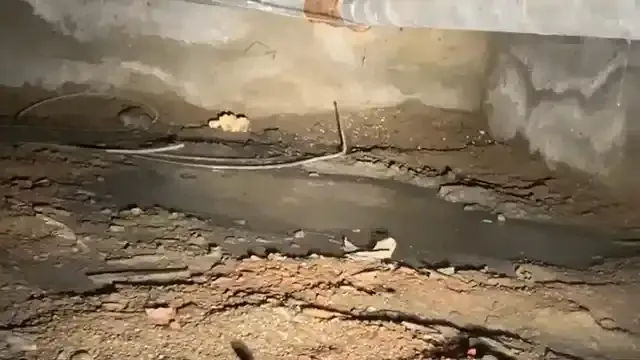
Crawl Space Plumbing Leaks in Pueblo County Homes
Crawl space construction is common in Pueblo County's older housing stock: the historic Bessemer, Mesa Junction, Highland Park, Salt Creek, and Eastwood Heights neighborhoods contain a significant number of pre-1960 homes built on pier-and-beam or perimeter wall foundations with a crawl space beneath the first floor. The supply lines, drain pipes, and vent stacks for the entire house run through this space, accessible from a small entry hatch but otherwise enclosed and unmonitored.
When a supply line or drain connection fails in a crawl space, the moisture has several potential destinations depending on the crawl space construction. In homes with a bare earth floor, water from a supply leak drains into the soil: the resulting elevated ground moisture promotes mold growth on the wood framing above and can destabilize the soil beneath foundation piers over time. In homes with a vapor barrier, water collects in pools on the barrier surface and creates a standing-water environment beneath the floor joists. Either condition can go undetected for extended periods because crawl spaces are typically entered only when a specific maintenance issue prompts inspection.
The above-floor evidence of a crawl space plumbing leak typically appears as a soft spot in the floor: the subfloor decking above a persistent wet area loses structural integrity, or a musty odor that enters the living space through floor openings around plumbing penetrations. In older Pueblo County homes where the crawl space ventilation is limited, the odor can permeate the entire first floor.
Crawl Space Leak Detection
Detection begins with a crawl space entry inspection: a physical walk-through with a moisture meter and light to map wet areas, identify dripping pipes, and locate visible damage to the vapor barrier or insulation. This establishes the affected area before detection equipment is deployed.
A pressure test of the supply system confirms whether an active supply leak exists. With all fixtures off and the main valve open, pressure gauge readings at an accessible point measure whether the system is holding pressure. A drop confirms an active supply side failure. Acoustic detection from within the crawl space, where operators can position listening equipment close to the pipe runs, locates the specific failure point efficiently.
For drain connection failures, which require active drainage to detect, each fixture above the crawl space is run in sequence while an operator below observes the drain run for active dripping. Kitchen sink drain, bathroom sink, tub drain, and toilet flush are each tested in isolation to identify the specific fixture and connection that is losing water.
In Pueblo County homes where the crawl space has not been entered in years, the first inspection often reveals not just the active leak but also evidence of past water intrusion, stained framing, deteriorated insulation, and vapor barrier damage that should be addressed as part of a complete remediation rather than just the pipe repair.
Crawl Space Pipe Repair in Pueblo County
Supply line failures in crawl spaces, typically galvanized pipe in pre-1955 homes or copper in mid-century construction, are repaired or repiped depending on the overall condition of the accessible pipe run. Galvanized systems showing widespread corrosion in the crawl space section are strong candidates for full repipe through the crawl space with copper or PEX while access is readily available. Drain connections are re-sealed or replaced at the specific failure points identified during the fixture-by-fixture test. Call (303) 552-3896 for crawl space leak detection and repair throughout Pueblo County, including rural homes in Avondale, Rye, and Beulah that commonly use pier-and-beam construction on larger rural lots.